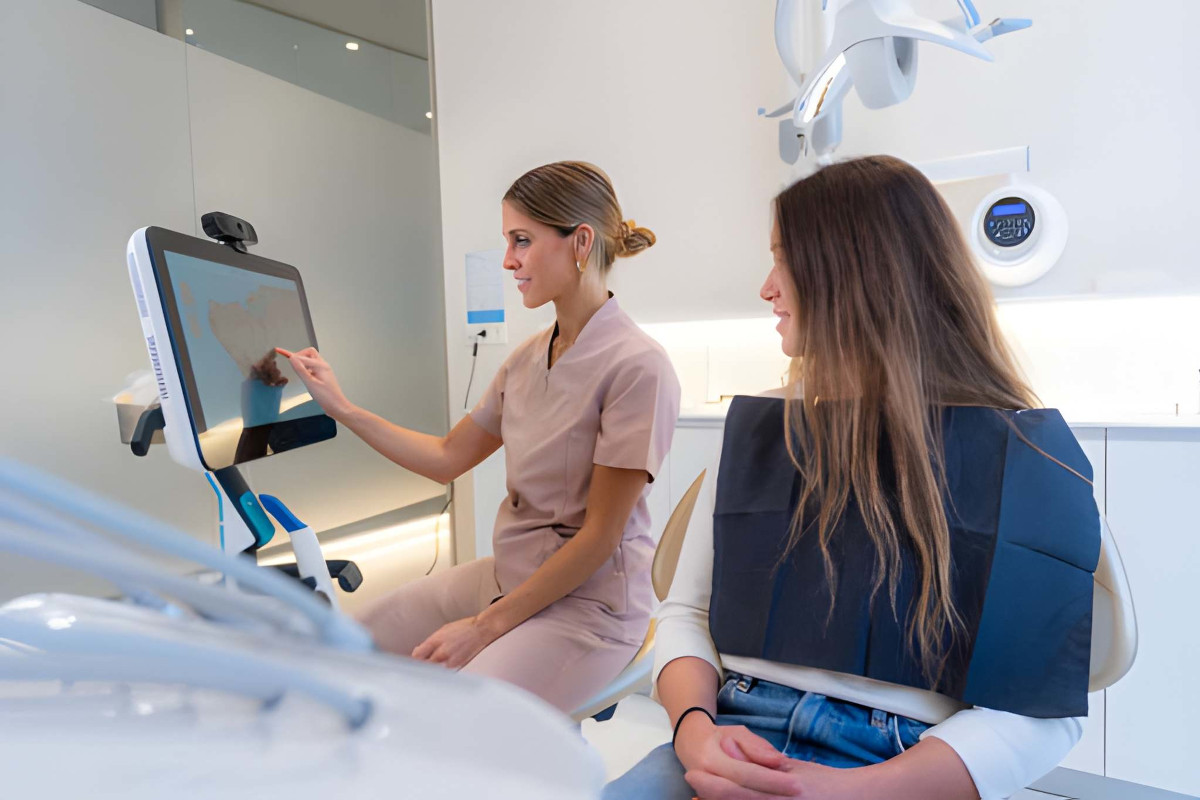
Artificial intelligence, often called AI, is entering more and more areas of healthcare. The dental world is no exception. Rather than replacing professionals, AI offers new ways to improve care, communication, and the overall experience for patients.
In dental clinics, AI is not science fiction. It is becoming a concrete tool that supports both the team and the patients.
What can AI really bring to dental care?
Contrary to some myths, AI does not make diagnoses on its own and does not replace a dentist’s judgment. It works as a support tool that helps to:
- detect certain signs more quickly on radiographs
- improve the accuracy of some clinical follow-ups
- offer better consistency in clinical note taking
- automate repetitive tasks that take time away from the team
These tools help professionals spend more time where they are essential: with their patients.
Better communication with patients
One of the most promising roles of AI in dental care is improving communication. Patients want to understand their treatments, their options, and the consequences of their decisions.
With visual aids, adapted explanations, or simplified summaries, AI makes it easier to:
- explain treatments in a clearer and more personalized way
- help patients better understand the condition of their mouth
- reduce anxiety related to the unknown
In a field where information can sometimes seem complex, good understanding makes all the difference.
More efficient clinics day to day
Beyond the patient experience, AI also helps dental teams manage their day-to-day work more efficiently. It can contribute to:
- automatically gathering information that is scattered in different places
- generating preliminary clinical notes from dictated speech
- reminding the team of certain recommendations or points to check
- optimizing administrative organization
These improvements allow clinics to be more available and more present for their patients.
Mordicus: discreet but effective support
At Mordicus, we see this evolution with both enthusiasm and care. The goal is not to replace human work, but to support it.
AI already helps improve how patients receive information: educational videos, visual explanations, simplified interpretation of treatment plans, and content adapted to each profile.
The more accessible and well explained the information is, the easier it becomes for a patient to make an informed decision and feel confident.
In conclusion
The arrival of AI in dental care marks a new stage in the relationship between patients and clinics. Tools are becoming smarter, but the human role remains central.
With thoughtful use focused on the patient experience, AI allows care to be clearer, more efficient, and better understood.
And in a field where communication matters as much as technique, these advances are an important opportunity to strengthen the bond between dentists and their patients.
See you soon!